Introduction
Among all Christian prayers, the Our Father holds a privileged place.
Known also as the Lord’s Prayer, it is the only prayer that Christians believe was taught directly by Jesus Christ Himself. For nearly two thousand years it has been prayed by Catholics, Orthodox Christians, Protestants, and countless other followers of Christ. It is recited in the Mass, prayed in the Rosary, included in the Liturgy of the Hours, and taught to children as one of the first prayers of the Christian faith.
Because of its familiarity, the Our Father can easily become overlooked. Yet within its brief lines are contained some of the most important themes of Christian theology: the fatherhood of God, the coming of God’s Kingdom, dependence upon divine providence, forgiveness, temptation, and salvation.
The prayer is both simple enough for a child to memorize and profound enough to occupy theologians for centuries.
Unlike many other traditional prayers that developed gradually through liturgical and devotional practice, the Our Father begins with a unique claim: it originates in the teaching of Christ Himself.
For this reason, the Church has traditionally regarded it as the model of all Christian prayer.
The Prayer in Scripture
The Our Father appears in two places within the New Testament.
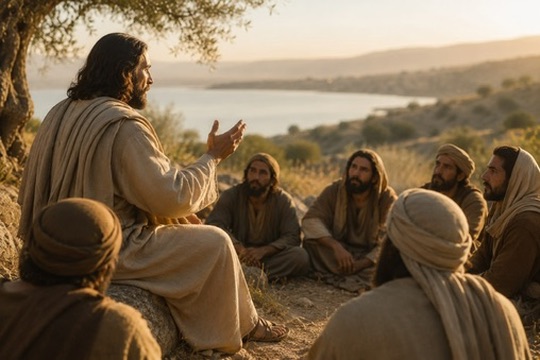
Matthew 6:9–13: Jesus teaches the prayer during the Sermon on the Mount.
Luke 11:2–4: Jesus teaches the prayer after one of His disciples asks, “Lord, teach us to pray.”
These two versions are similar but not identical.
The version found in Matthew became the standard form used throughout most of Christian history and serves as the foundation for the prayer used in Catholic worship today.
The existence of two biblical versions reminds us that the Our Father was not originally a fixed liturgical formula but a teaching given within the living ministry of Christ.
Why Jesus Taught This Prayer
The context of the prayer is important.
In the Sermon on the Mount, Jesus cautions against superficial religious displays and meaningless repetition. He emphasizes that prayer is not primarily about impressing others or simply uttering words. Instead, it is about cultivating a genuine connection with the divine.
Immediately before teaching the Our Father, Jesus says: “Your Father knows what you need before you ask him.” The prayer, therefore, begins not with human need but with divine relationship. God is addressed as Father. Everything else follows from that reality.
“Our Father”
The opening words are among the most radical in Christian history.
Jesus does not teach His followers to pray: “My Father”.
He teaches them to pray: “Our Father”
The prayer is communal from its first word.
Even when prayed alone, the Christian speaks as part of a larger family of faith.
The title “Father” reflects the intimate relationship Jesus Himself shares with God and invites believers to participate in that relationship.
|The opening line, therefore, expresses both divine intimacy and Christian unity.
“Who Art in Heaven”
The phrase strikes a harmonious balance between intimacy and reverence. God is close enough to be addressed as Father, yet He remains transcendent. The prayer gracefully avoids two extremes: it neither diminishes God to a mere human figure nor portrays Him as distant and unreachable. Slid, the Christian God embodies both the qualities of a loving Father and the authority of a Lord of Heaven.
The First Three Petitions: God First
The prayer begins by focusing entirely on God.
Hallowed Be Thy Name
This is not a request that God’s name become holy.
Rather, it is a prayer that God’s holiness be recognized and honored throughout the world.
Thy Kingdom Come
This petition expresses hope for the fulfillment of God’s reign.
Christians pray for the growth of God’s Kingdom in the present and its ultimate fulfillment at the end of time.
Thy Will Be Done
The prayer asks that human life be brought into harmony with God’s will.
It reflects the obedience perfectly demonstrated by Christ Himself.
These first three petitions reveal an important principle.
Before asking for anything for ourselves, we first turn our attention toward God.
The Second Four Petitions: Human Need
Only after focusing on God does the prayer address human concerns.
Give Us This Day Our Daily Bread
This may be the most debated line in the prayer. At its simplest level, it acknowledges dependence upon God for daily necessities. Throughout Christian history, however, the phrase has also been understood more deeply.
Many Church Fathers saw references to:
God’s providence
Spiritual nourishment
The Word of God
The Eucharist
The line, therefore, operates on multiple levels simultaneously.
Forgive Us Our Trespasses
The prayer recognizes human sinfulness. It also introduces a startling condition: As we forgive those who trespass against us. The believer asks God to forgive according to the same standard that he or she applies to others; few lines in any Christian prayer are more challenging.
Divine mercy and human mercy become inseparably connected.
Lead Us Not into Temptation
This petition has often generated questions. Catholic teaching does not understand it to mean that God actively tempts people to sin. Rather, it expresses a plea for protection and perseverance during trials and spiritual testing. The prayer acknowledges human weakness and dependence upon divine assistance.
Deliver Us from Evil
The final petition asks for liberation from all forms of evil.
Historically, Christians have understood this line broadly.
It includes:
Moral evil
Spiritual evil
Suffering
Sin
The power of Satan
The prayer concludes with confidence that God ultimately possesses the power to save.
The Our Father in Catholic Worship
The Lord’s Prayer occupies a unique position in Catholic liturgy.
It is prayed during:
The Mass: Immediately before Communion.
The Rosary: Before each decade.
The Liturgy of the Hours: As part of the Church’s daily prayer.
Sacramental Life: It appears throughout numerous rites and blessings.
No other prayer enjoys such universal use across Catholic worship.
The Church’s Understanding of the Our Father
The Church has consistently regarded the Our Father as the model of Christian prayer.
Early Christian writers referred to it as a summary of the Gospel. Church Fathers wrote extensive commentaries upon it. The Catechism of the Catholic Church devotes an entire section to its meaning. This special status arises because the prayer teaches believers not only what to pray, but how to pray.
It forms Christian priorities.
God comes first.
Human needs follow.
Forgiveness is linked to mercy.
Dependence upon God is assumed.
Hope remains constant.
The prayer, therefore, functions as both prayer and instruction.
The Our Father and the Rosary
Within the Rosary, the Our Father serves as the gateway to each mystery. Every decade commences with the prayer taught by Christ. The Hail Marys that follow establish the rhythm of meditation. This arrangement reflects a centuries-old balance within Catholic spirituality. The Rosary is profoundly Marian, yet every decade begins with Christ’s prayer. The structure itself reveals the Rosary’s Christ-centered foundation.
What the Our Father Is Doing
The prayer accomplishes several things simultaneously.
It teaches. Christ instructs His followers how to pray.
It forms a relationship. Believers address God as Father.
It establishes priorities. God’s glory and Kingdom come before personal needs.
It expresses dependence. Daily bread, forgiveness, and protection come from God.
It cultivates hope. The prayer looks toward God’s Kingdom and ultimate deliverance.
For these reasons, the Our Father is more than a prayer. It is a summary of Christian discipleship.
Conclusion
The Our Father occupies a unique place in Christian history because it is the prayer most directly associated with the teaching of Jesus Christ. Its words have been repeated by believers for nearly two millennia. Its petitions remain as relevant today as they were in first-century Judea. The prayer teaches Christians how to approach God, understand their relationship with others, seek forgiveness, and place their trust in divine providence.
For Catholics, it remains not merely one prayer among many, but the prayer against which all other prayers are measured. The Church treasures the Hail Mary, the Glory Be, the Apostles’ Creed, and countless other devotions.
Yet the Our Father stands apart. It is the prayer that Christ gave to His disciples. And for that reason, it remains the foundation of Christian prayer itself.
Key Historical Milestones
1st Century: Jesus teaches the prayer in Matthew and Luke.
1st–2nd Century: Early Christians adopt the prayer into worship.
2nd Century: The Didache instructs Christians to pray it three times daily.
4th–5th Centuries: Major Church Fathers write extensive commentaries on the prayer.
Middle Ages: Incorporated deeply into liturgical and devotional life.
16th Century: Preserved in post-Tridentine liturgical reforms.
Present Day: Remains the most universally recognized prayer in Christianity.


