
An occasional personal reflection from the author of Living Rosary Archives
©MS 2026
Most of the time, when you visit Living Rosary Archives, you’ll find me somewhere in the past.
I might be examining the history of a particular rosary material, tracing the work of forgotten beadmakers, following centuries-old trade routes, or searching for the name of a craftsperson whose work has survived long after their story was forgotten.
It is work I love. It is also work that requires considerable patience, curiosity, and a willingness to follow a question wherever it might lead.
But occasionally, I think it is worthwhile to step out from behind the research desk and share a little of the person doing all that searching.
And lately, life has given me quite a bit to reflect upon.
A Journey to the Pacific Northwest
At the end of October, my husband and I traveled from Texas to Washington State for a visit to the northern Seattle area.
While this was partly an opportunity to explore a place we have been considering calling home, it also became something of a restorative journey.
We spent time exploring communities north of Seattle, traveled through Whidbey Island and Bainbridge Island, and experienced the extraordinary beauty of the Pacific Northwest in autumn.
Coming from Texas, where the changing seasons can sometimes feel more like a suggestion than a certainty, I found the autumn colors particularly captivating.
The trees were dressed in brilliant shades of gold, amber, crimson, and orange. Leaves collected along sidewalks, roadsides, and beneath towering trees. Even the ordinary moments seemed to invite a second look.

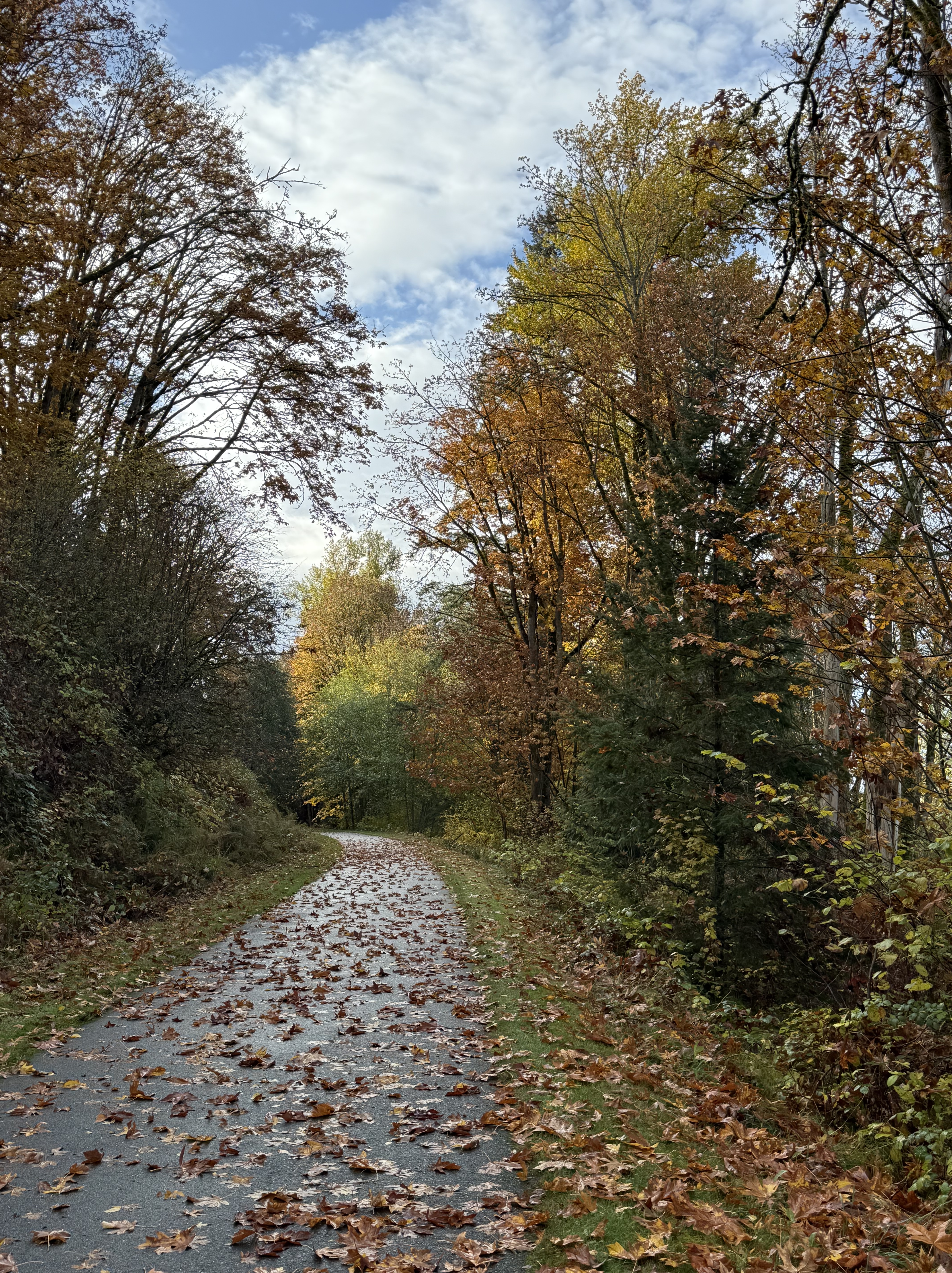
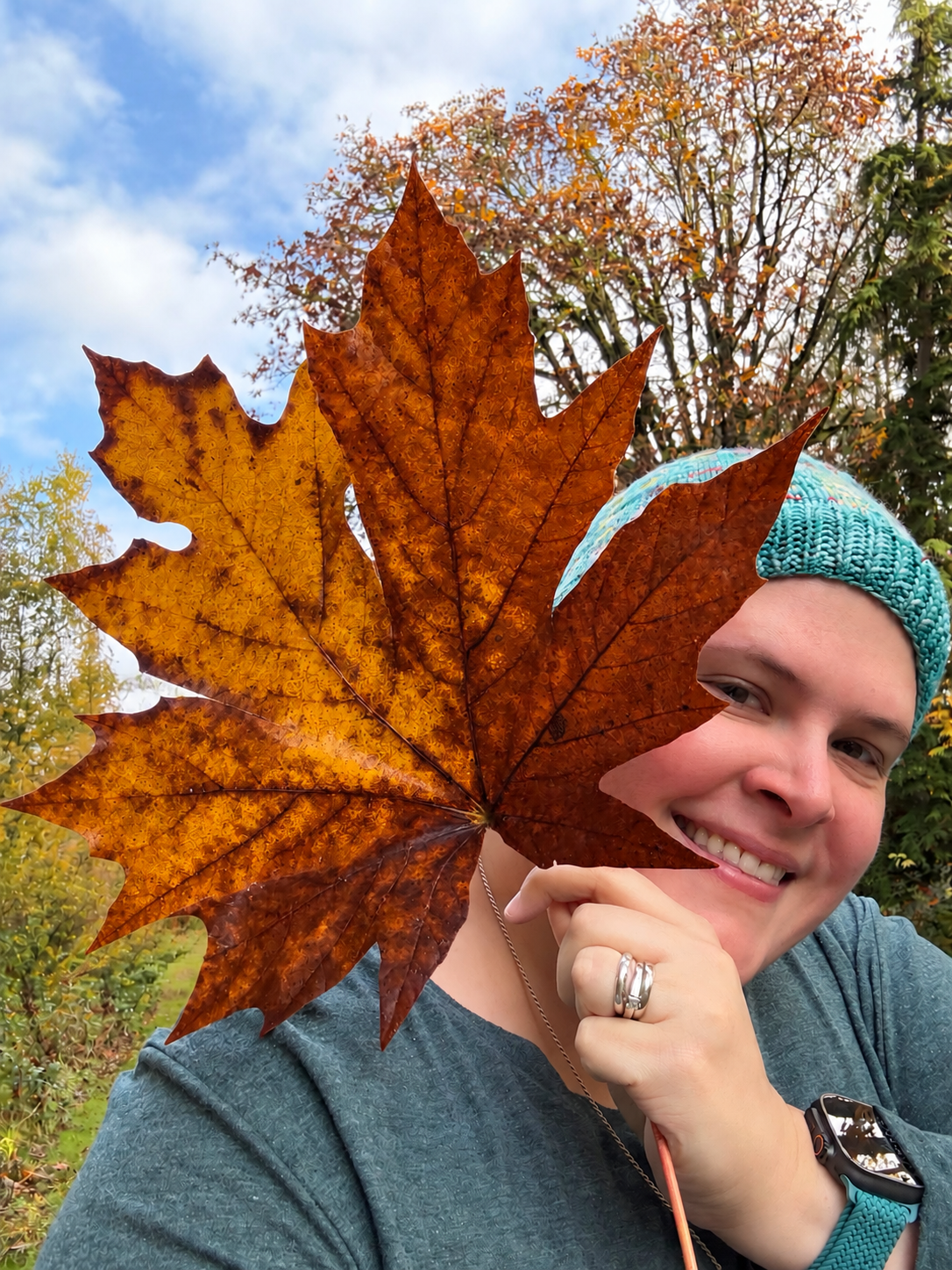
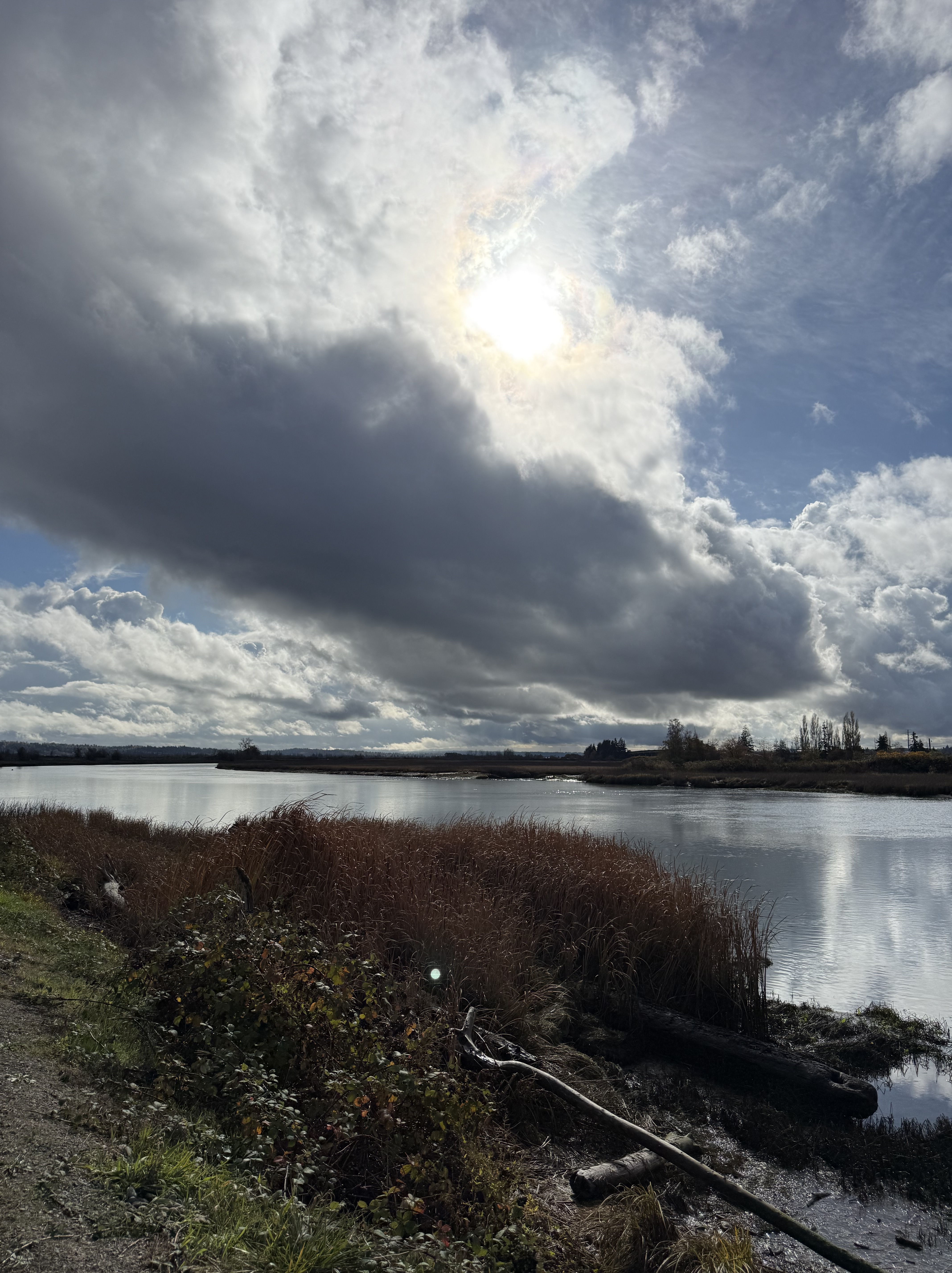
There is something remarkable about being reminded that beauty does not always require an extraordinary setting.
Sometimes it is simply a leaf.
A particular shade of red.
The sunlight passing through the branches of a tree.
Or a quiet moment when you remember to look around rather than hurry toward whatever comes next.
One of the highlights of our trip was spending time on the water during a whale-watching excursion.
We had the opportunity to see Humpbacks and a Orca pod in its natural environment, an experience that is difficult to adequately capture in words.
There is something humbling about watching such a magnificent creature move through the water. For a few moments, the ordinary concerns of daily life seemed very far away.
The experience was beautiful, but it also reminded me how much of the world exists entirely beyond our control, quietly carrying on whether or not we are there to witness it.
I brought home photographs, memories, and perhaps a little more wonder than I had packed for the journey.
A Small Cross and a Much Larger Question
Another part of this trip involved something considerably smaller than a whale or an autumn landscape.
A necklace.
More specifically, a cross I had purchased but I experienced resistance to wearing it.
As I have continued exploring and deepening my Catholic faith, I have found myself thinking about what it means to wear a visible symbol of that faith. Normally I have worn my St. Tresa of Avila pendant, which, unless you know what that is, it doesn’t register as Catholic… it is just a pendant.
For some people, putting on a cross necklace may be a simple, natural act. It is something they have always done, or something they do without giving it much thought.
For me, it has required more reflection.
It’s a beautiful cross to me, because it is a wooden cross but the red garnets remind me of the 5 wounds of Christ and it represents the same as a crucifix, when I don’t want to have the imagery of Christ dying on the cross.
And yet, I have struggled with wearing it.
Not because I question whether I am permitted to wear a cross. Not because I believe wearing it incorrectly would somehow be sinful. And not because I think there is a religious rule I must perfectly satisfy before I can put it around my neck.
I do not think scrupulosity quite describes what I have been experiencing.
Instead, I have been wrestling with a more personal questions:
What does it mean for me to wear the cross?
What does it mean to identify myself publicly with Christ?
What does it mean to carry a symbol of His love when I am still learning how to receive that love?
Learning to Receive What I Already Believe
That last question has stayed with me.
Because there is an enormous difference between knowing that God loves us and being able to accept that love as something meant for us personally.
Intellectually, I understand the teachings of the Church. I understand that Christ’s sacrifice was an expression of extraordinary love. I understand that His mercy is not something we can purchase, negotiate, or earn through a lifetime of perfect behavior.
I can read those words in Scripture. I can contemplate them while praying the Rosary. I can recognize their meaning in the lives of the saints and in the writings of the Church.
But understanding a truth does not necessarily mean that the heart has learned how to live within it.
And I think this is where much of my struggle begins.
I have spent a considerable part of my life learning how to stand on my own, how to navigate difficult circumstances, and how to rely upon myself when things become uncertain.
Those experiences shape how we understand love, trust, and vulnerability.
When love has sometimes felt conditional, it can be difficult to comprehend a love that is freely given.
When acceptance has felt dependent upon meeting expectations, the idea of being loved without first proving oneself can feel almost impossible to understand.
And when self-reliance has become a familiar form of protection, allowing ourselves to be loved can require a kind of vulnerability that we have spent years learning to avoid.
I can believe that Christ loves me and still find myself wondering whether I truly know how to accept that love.
There is a part of me that wants to approach Him with everything already resolved.
To have the difficult questions answered.
To have the uncertainties quieted.
To have become the kind of person I imagine a faithful Catholic ought to be.
Only then, perhaps, would I feel ready to stand before Him without hesitation.
But that understanding creates a problem.
Because it quietly turns love into something that must be earned.
And that is precisely what the Cross challenges.
Christ did not wait for humanity to become perfect before giving Himself.
He entered into the brokenness of the human condition.
He loved first.
And perhaps what I am struggling to understand is not whether that love exists, but whether I can allow myself to believe that it exists for me, too.
Not for some future version of myself who has finally resolved every uncertainty.
Not for the person I think I should have become.
But for the person I am now.
The one who still has questions.
The one who sometimes hesitates.
The one who is still learning how to trust.
There is something deeply uncomfortable, and yet profoundly beautiful, about the possibility that I do not have to finish becoming worthy of love before I can begin receiving it.
In fact, perhaps I have been approaching the entire question backward.
I have been wondering whether I am worthy enough to wear a symbol of Christ’s love.
But the Cross does not exist to proclaim my worthiness.
It exists to proclaim His love.
And those are two very different things.
Wearing the Cross Without Having All the Answers
This realization has not magically removed my hesitation.
I would love to say that I reached some beautiful moment of clarity, placed the necklace around my neck, and never questioned it again.
But faith rarely unfolds so neatly.
There are still moments when I feel like an outsider, even within a faith that has become increasingly important to me.
There are still questions about belonging, identity, and what it means to call myself Catholic after spending so many years away from the Church.
And there is still a part of me that worries that wearing the cross might communicate a confidence I do not always feel.
As though wearing it announces to the world that I have figured everything out.
That I have no doubts.
That I am entirely comfortable in my relationship with God.
But perhaps the necklace does not need to mean any of those things.
Perhaps wearing the cross is not a declaration that I have reached the end of my spiritual journey.
Perhaps it is an acknowledgment that I am still walking.
That I am learning.
That I am willing, however imperfectly, to remain open to a love I do not yet fully understand how to receive.
During our travels, I made a small decision.
I wore the cross.
It remained tucked beneath my clothing, unseen by most of the people around me.
There was no grand announcement, no extraordinary event, and no sudden resolution to all the questions I had been carrying.
Just a small, deliberate act.
But it mattered to me.
Because the act of putting on the necklace did not require me to answer every question first.
I did not have to convince myself that I had become a sufficiently good Catholic.
I did not have to prove that I understood the depth of Christ’s sacrifice.
And I did not have to pretend that accepting unconditional love had suddenly become easy.
For that day, I simply allowed myself to wear it.
I am beginning to wonder whether this is part of what faith asks of us.
Not that we arrive at perfect understanding before taking the next step, but that we remain willing to take that step even when our understanding is incomplete.
And perhaps, sometimes, learning to receive love begins with the smallest possible act of allowing it to be offered.
There is a tenderness in that thought that I am still learning to sit with.
Maybe I do not have to feel completely worthy of wearing the cross in order to wear it. Maybe the Cross is there, in part, to remind me that His love was never dependent upon my feeling worthy in the first place.
I am still working through those questions.
I suspect I will be for some time.
And perhaps that is all right.
A New Chapter Ahead
Our visit to Washington was more than a vacation.
My husband and I are preparing to relocate to the northern Seattle area in the summer of 2027.
It is an exciting, but also a substantial undertaking.
Moving to another state means more than packing boxes and finding a new address. It means leaving familiar places, establishing new rhythms, discovering new communities, and learning how to make a home somewhere different.
For Living Rosary Archives, this prospective move may also bring changes to my writing and publication schedule.
The Archives is a personal research project, developed and maintained alongside the ordinary responsibilities of work, family, and daily life.
Much of the research requires extended periods of reading, cross-referencing historical sources, reviewing museum collections, examining materials, and sometimes reaching out to institutions in other countries.
It is not work that lends itself particularly well to being rushed.
As we move closer to next summer, I may need to adjust the sequence in which articles are researched, completed, and published.
Some subjects may be delayed. Others may appear earlier than originally anticipated, depending on how much research has already been completed and what time is available.
My commitment to the purpose of the Archives, however, remains unchanged.
I began this project because I believe the history of the rosary deserves careful attention, particularly the people, materials, and traditions that contributed to its development.
The many hands that made these devotional objects deserve to be remembered.
That work will continue, even if the pace occasionally changes.
A Brief Pause for Rest and Recovery
Unfortunately, not everything I brought home from Washington was quite as lovely as the photographs.
Shortly after returning to Texas, I became ill with a respiratory bug, and it has left me considerably more exhausted than I anticipated.
As I write this, I am still recovering.
Because of that, I have decided to temporarily step away from researching and writing new articles until I feel well enough to return.
This particular reflection is the exception.
Readers may still see previously scheduled articles appear on the website during this period. Some posts have already been prepared and placed into the publication schedule, so their appearance should not necessarily be taken as a sign that I have returned to active research.
For the moment, I need to give myself permission to rest.
The books, documents, historical questions, and unfinished drafts will still be there when I return.
And the history is certainly not going anywhere.
Looking back, the past several weeks have brought together several things I did not necessarily expect to find connected.
An autumn landscape.
A whale moving through cold northern waters.
A small silver cross resting beneath my shirt.
The possibility of a new home.
And the realization that even meaningful work sometimes needs to be set aside so that the person doing it can recover.
Perhaps the thread connecting all of these experiences is simply that life, like faith, is not always something we can understand while we are in the middle of it.
Sometimes we are researching the past.
Sometimes we are learning to inhabit the present.
And sometimes we are preparing for a future we can only begin to imagine.
Thank you to everyone who has taken the time to visit Living Rosary Archives, read an article, explore a historical question, or follow along with this unusual and deeply rewarding project.
I am grateful that these stories have found readers, and I look forward to continuing our exploration of the rosary’s history when I am feeling better.
Until then, I hope you find a little beauty in the ordinary things around you.
Perhaps in a falling leaf.
Perhaps in an unexpected moment of quiet.
Or perhaps in something small that you are only beginning to find the courage to carry.
— Mindy S.


