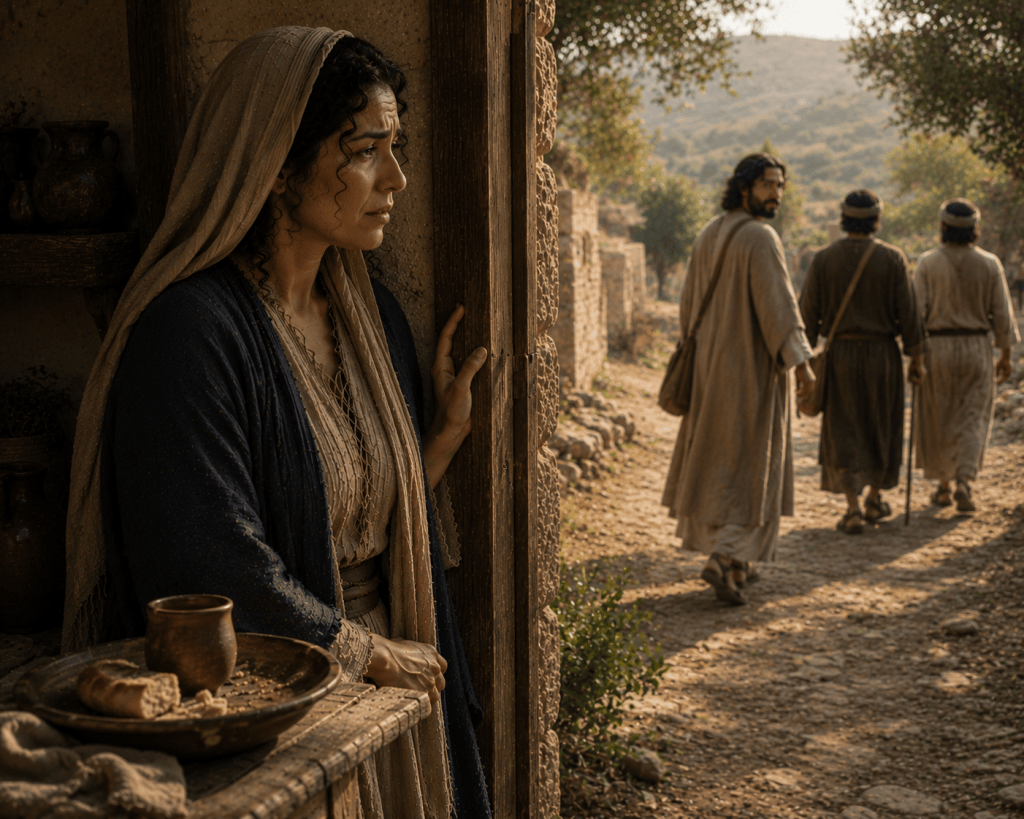
The Invitations of Mary Series
©MS 2026
There must have been a moment when “I hope he is eating” became “They might hurt him.”
At first, perhaps Mary worried about ordinary things.
Food.
Sleep.
Weather.
Roads.
Whether Jesus had somewhere safe to stay.
Whether the sandals he had been wearing for entirely too long had finally fallen apart.
Whether anyone traveling with him possessed the common sense to notice when he was exhausted.
Probably not.
Those were manageable worries.
The familiar ones.
A mother’s inventory.
Is he eating?
Is he sleeping?
Is he taking care of himself?
When will I see him again?
Mary had practiced those worries since Jesus left Nazareth.
They were uncomfortable.
Sometimes irritating.
Occasionally enough to keep her awake.
But they did not yet contain terror.
Jesus was traveling.
Jesus was teaching.
Jesus was gathering followers.
Jesus was becoming increasingly difficult to reach.
Still—
he was all right.
Then perhaps someone said:
“They tried to kill him.”
And everything changed.
We don’t know exactly when Mary learned how dangerous Jesus’ ministry was becoming.
The Gospels do not follow her closely enough to tell us.
But they do tell us something unmistakable:
danger came early.
Luke places one of the most startling episodes near the beginning of Jesus’ public ministry.
Jesus returns to Nazareth.
His hometown.
The place where he had grown up.
He enters the synagogue on the Sabbath.
He reads from Isaiah.
At first, people speak well of him.
Then the conversation changes.
Jesus challenges them.
Their admiration becomes anger.
And Luke says the people in the synagogue became enraged.
They got up.
Drove him out of town.
Led him to the brow of the hill on which Nazareth was built.
And intended to throw him down.
Then Jesus passed through the middle of them and went on his way.
Read that again without knowing how the Gospel ends.
Not as theology.
Not as foreshadowing.
As information given to someone’s mother.
They took your son to the edge of a hill and tried to throw him off.
That may have been the moment.
Maybe Mary was there.
Luke does not tell us.
We should not put her in the synagogue as though Scripture says she witnessed it.
Perhaps she heard afterward.
And maybe hearing afterward was worse.
Someone came quickly.
“Mary.”
She looked up.
That tone again.
She was beginning to hate that tone.
“What happened?”
“Jesus—”
Her stomach dropped before the sentence finished.
“What happened?”
“There was trouble at the synagogue.”
“What kind of trouble?”
Maybe the person hesitated.
Mary stepped closer.
“What happened?”
“They drove him out.”
Mary stared.
“Why?”
“I don’t know exactly.”
“Where is he?”
“He’s all right.”
Those four words have never reassured a mother in the history of humanity.
He’s all right.
Why are you telling me he’s all right?
“Where is he?”
“He left.”
“Left where?”
“I don’t know.”
Mary’s voice changed.
“What happened?”
And then she heard.
The hill.
The crowd.
The anger.
Hands on him, perhaps.
Men shouting.
People she knew.
People who had known Jesus as a child.
People who had known Joseph.
People who had watched Jesus grow.
They tried to kill him.
Maybe Mary sat down.
Not gracefully.
Just because her legs stopped cooperating.
No.
Perhaps that was her first thought.
Not theological.
Not:
His hour has not yet come.
Not:
God will protect him.
Just:
No.
Maybe she demanded details.
“Who?”
Names.
She wanted names.
“Who was there?”
“Mary—”
“Who?”
Maybe someone told her.
And perhaps that made it worse.
Because she knew them.
Of course she did.
This was Nazareth.
That man?
He bought something from Joseph once.
That family?
Jesus played near their children.
That one?
Mary had eaten at his table.
How does a hometown crowd become a mob?
Probably the way crowds always do.
One person shouts.
Another joins.
Anger becomes permission.
People who would never independently decide to murder someone become capable of following everyone else toward a cliff.
Mary may have learned something terrible that day:
familiarity does not guarantee safety.
Until then, perhaps danger had been abstract.
Roads could be dangerous.
Travel could be dangerous.
Illness happened.
Accidents happened.
Mary knew that.
She had already buried Joseph.
She did not believe good people were protected from death simply because they were loved.
But this was different.
This was intentional.
People wanted to hurt Jesus.
Maybe that was the line.
There is a difference between fearing that something might happen to someone you love—
and realizing that another human being may choose to make it happen.
That changes the body.
Maybe afterward Mary listened differently whenever someone mentioned Jesus.
We imagined earlier how she overheard strangers discussing him.
At first, perhaps there had been curiosity.
Pride.
Amusement.
Even irritation.
Everyone suddenly had opinions about her son.
After Nazareth?
An angry voice saying his name would make her turn.
Immediately.
“What did you say?”
Maybe she began noticing the language.
Not just:
“I disagree with him.”
But:
“He should be stopped.”
Stopped how?
“He’s dangerous.”
To whom?
“He’s misleading people.”
What are you suggesting?
Perhaps Mary discovered how quickly theological disagreement could acquire teeth.
And then the reports continued.
Jesus healed on the Sabbath.
Some objected.
Jesus forgave sins.
Some called it blasphemy.
Jesus ate with people he wasn’t supposed to eat with.
Touched people he wasn’t supposed to touch.
Allowed people near him whom respectable society preferred at a distance.
Challenged interpretations.
Challenged authority.
Challenged hypocrisy.
And increasingly, people with power noticed.
That must have frightened Mary differently than a hostile crowd.
A crowd can erupt.
Authority can plan.
Mark tells us that after Jesus healed a man with a shriveled hand on the Sabbath, the Pharisees went out and immediately began plotting with the Herodians how they might kill him.
Kill him.
Not embarrass him.
Not silence him for an afternoon.
Not refuse to invite him back.
Kill him.
Did Mary know?
Maybe not immediately.
Perhaps Jesus didn’t tell her.
Would he?
That question hurts.
Maybe Mary asked once:
“Are you in danger?”
Jesus did not answer quickly enough.
There.
Every mother knows that pause.
“Jesus.”
“I’m all right.”
“That is not what I asked.”
Perhaps he looked at her.
Mary waited.
“Some people are angry.”
“How angry?”
Jesus looked away.
Absolutely not.
“How angry?”
Maybe he told her.
Maybe he didn’t tell her everything.
Adult children do that too.
They decide what their parents can handle.
Usually incorrectly.
“There’s nothing you need to worry about.”
Mary stared at him.
Imagine saying that to Mary.
A woman who had once fled to Egypt with him because a king wanted him dead.
Nothing to worry about.
Right.
Perhaps she reminded him.
“I have been worrying about you since before you could hold your own head up.”
Jesus almost smiled.
Mary did not.
“This is different.”
Maybe she said it.
And it was.
Because Mary had known fear for Jesus before.
We cannot forget Herod.
If Matthew’s account belongs within the chronology we are imagining, Mary had once been a very young mother awakened into flight because Herod sought the child’s life.
She knew what it meant to run.
She knew Egypt.
She knew the vulnerability of carrying a child someone powerful wanted dead.
But Jesus had been a baby then.
Mary could take him.
Joseph could lead them away.
They could flee.
They could hide.
They could protect him.
Now Jesus was a grown man.
And he was walking toward danger.
That may have been the truly unbearable difference.
“Mama, I know what I’m doing.”
Maybe he said something like that.
Mary believed him.
That did not help.
Because if Jesus misunderstood the danger, perhaps she could warn him.
If he did not know people were angry, she could tell him.
If he were being careless, she could beg him to be careful.
But if Jesus understood perfectly—
and continued anyway—
what exactly was Mary supposed to do?
Perhaps that was when maternal fear became helplessness.
She could not pick him up.
Could not take him to Egypt.
Could not ask Joseph:
What do we do?
Could not lock the door.
Could not tell him:
You’re not going.
Well.
She could tell him.
It simply wouldn’t work.
Maybe she tried once.
“Stay here for a few days.”
Jesus looked at her.
“Please.”
That word might have surprised both of them.
“Just a few days.”
“I can’t.”
“You can.”
“Mama.”
“They are threatening you.”
“I know.”
There it was.
Mary’s anger arrived because fear sometimes needs somewhere to go.
“Then why are you going back?”
Maybe Jesus didn’t answer immediately.
Because there was no answer Mary wanted.
“The work isn’t finished.”
“I don’t care about the work.”
Perhaps she said it.
And immediately hated herself for it.
Jesus looked at her.
Mary’s eyes filled.
“No.”
She corrected herself.
“I do.”
Pause.
“I do.”
She swallowed.
“I just care about you too.”
There.
The impossible division.
The world needed what Jesus was doing.
Mary needed Jesus alive.
Those two things were beginning to feel as though they might eventually collide.
Perhaps Jesus reached for her hand.
The hands everyone else wanted.
Healing hands.
Teaching hands.
Hands people pressed toward in crowds.
To Mary—
still the hands she had once held crossing a road.
“I know.”
Maybe that’s all he said.
And maybe that infuriated her.
Because:
I know
doesn’t solve anything.
Maybe Mary pulled her hand away.
Walked outside.
Cried somewhere Jesus couldn’t see.
Then became angry because of course he probably knew anyway.
Perhaps she prayed.
Not beautifully.
Not:
Let your will be done.
Not yet.
Keep him safe.
Maybe that was the whole prayer.
Keep him safe.
The next day:
Keep him safe.
When someone said Jesus had gone toward another town:
Keep him safe.
When she heard authorities were questioning him:
Keep him safe.
When someone mentioned another confrontation:
Keep him safe.
It may have become the rhythm beneath everything.
Mary still lived.
She still worked.
Visited people.
Ate.
Laughed.
Helped.
Prayed.
Went to synagogue.
Carried water.
Prepared food.
Did all the ordinary things we imagined after Jesus left home.
But now perhaps there was something underneath every day.
A thread pulled tight.
Where is he?
Not constantly.
Nobody can sustain terror constantly.
The nervous system eventually demands ordinary life.
Mary might go hours without thinking about danger.
Then someone would arrive from Capernaum.
“Have you heard about Jesus?”
Her body reacted before her mind did.
“What happened?”
Maybe the news was wonderful.
“He healed someone.”
Mary exhaled.
Maybe she hated that relief.
Because she had become someone who heard her son’s name and immediately expected disaster.
That is what genuine fear does.
It colonizes neutral information.
A knock at the door.
Footsteps approaching quickly.
Someone saying your name.
A traveler asking:
“Are you Mary?”
Every ordinary thing becomes capable of carrying terrible news.
Perhaps she learned to read faces.
Happy face?
Fine.
Confused?
Probably another theological controversy.
Serious?
Mary’s stomach dropped.
Maybe one day a disciple came.
Peter perhaps.
Mary saw him.
He was alone.
Her heart stopped.
“Where is Jesus?”
Peter blinked.
“What?”
“Where is he?”
“He’s—”
“Is he all right?”
“Yes.”
Mary closed her eyes.
Peter finally understood.
“Oh.”
Maybe he became more careful after that.
When arriving without Jesus:
He’s fine.
First sentence.
Then hello.
Mary appreciated Peter more after that.
Maybe the disciples began understanding her fear.
They were frightened too sometimes.
That mattered.
They saw things Mary didn’t.
Crowds turning.
Questions becoming traps.
Men watching from the edges.
Jesus deliberately walking into conversations everyone else would have avoided.
Perhaps John told her quietly once:
“He knows.”
Mary looked at him.
“Knows what?”
“That they’re watching him.”
Mary’s face tightened.
“And?”
John hesitated.
“He isn’t afraid.”
Of course he wasn’t.
Wonderful.
Mary was afraid enough for both of them.
But maybe Jesus was afraid sometimes.
We should be careful not to strip his humanity from him in the opposite direction.
The Gospels ultimately give us Gethsemane.
Anguish.
Sweat.
A desire, if possible, for the cup to pass.
Jesus was not incapable of experiencing the approach of suffering.
Courage is not ignorance of danger.
Perhaps Mary saw moments of strain before anyone else did.
A jaw tightening.
Silence lasting longer.
The exhaustion after confrontation.
The way he sat when finally away from everyone.
“You’re frightened.”
Maybe she said once.
Jesus looked at her.
Not accusation.
Recognition.
Perhaps he didn’t answer.
He didn’t need to.
Mary sat beside him.
For once she did not say:
Don’t go.
Maybe that was growth.
Terrible growth.
Instead:
“Do you want something to eat?”
Jesus laughed softly.
“What?”
“Nothing.”
Mary frowned.
“You still have to eat.”
“I know.”
Good.
Some things remained within her jurisdiction.
She fed him.
Perhaps neither mentioned the danger again that evening.
There are conversations that become too large to hold continuously.
So you eat.
Talk about something else.
Someone in Nazareth.
A broken roof.
Peter doing something ridiculous.
The weather.
Then Jesus slept.
Mary didn’t.
Maybe she sat awake.
Listened.
That old habit.
She had done it when he was sick as a child.
Wake.
Listen.
Breathing.
Fine.
Sleep.
Now he was thirty-something years old and Mary was doing it again.
Breathing.
Fine.
She knew how absurd it was.
She did it anyway.
Morning came.
Jesus prepared to leave.
Mary watched.
She wanted to say:
Don’t.
Instead:
“Be careful.”
Jesus looked at her.
That sentence had become almost useless between them.
Still—
he nodded.
“I will.”
Maybe Mary almost laughed.
“No, you won’t.”
Jesus smiled.
Perhaps.
Then he left.
And Mary stood in the doorway again.
We’ve seen her there before.
The first time he left Nazareth, the fear had been about separation.
Now separation had acquired another possibility.
What if this is the last time?
That thought may have appeared quietly at first.
Mary probably pushed it away.
No.
But once death becomes imaginable, every goodbye changes.
Did she hug him longer?
Maybe.
Did Jesus notice?
Probably.
Did either say why?
Perhaps not.
There may have been many last-looking moments before the actual last one.
A mother memorizing without admitting she was memorizing.
His face.
His shoulders.
The way he walked.
The sound of him laughing with the disciples.
Because something inside Mary had begun preparing for news she refused to believe would come.
And still—
Jesus kept coming back.
That’s important.
Again and again, fear was disproved.
Today.
He returned.
Alive.
Mary saw him and something inside her unclenched.
She did not make a spectacle.
Maybe she simply touched his arm when he came near.
“You’re back.”
“Yes.”
Perhaps Jesus understood everything contained in those two words.
You’re back.
They didn’t take you.
Nobody hurt you.
God kept you.
I get another day.
Then the cycle began again.
That is perhaps what those ministry years felt like for Mary.
Not constant premonition of Calvary.
I don’t want to write her as though she lived beneath a permanent shadow shaped like a cross.
She didn’t know the Gospel ending the way we do.
There were weddings.
Meals.
Healings.
Laughter.
Travel.
Friends.
Success.
Crowds who loved him.
Days when danger probably felt distant.
But gradually—
the pattern became impossible to ignore.
People weren’t merely disagreeing with Jesus.
They were discussing how to destroy him.
John’s Gospel will become increasingly explicit.
Attempts to seize him.
Attempts to stone him.
Questions designed to trap him.
Jesus withdrawing because his hour had not yet come.
Hostility building.
At some point Mary no longer needed someone to explain what was happening.
She could see the direction.
Maybe she hated Jerusalem.
Not the holy city itself.
What it represented now.
Every time Jesus went toward it, perhaps something in her tightened.
“Do you have to go?”
“Yes.”
Of course.
Perhaps she stopped asking.
And maybe that was the most painful change.
At first Mary tried to prevent danger.
Then she tried to understand it.
Eventually she realized she could do neither.
So she did the only thing left.
She stayed near when she could.
Not controlling.
Not hovering.
Not pretending she wasn’t afraid.
Just—
near.
Maybe that’s why her presence at the Cross should not surprise us.
Mary had spent the ministry learning that she could not keep Jesus from walking toward danger.
But nothing said she had to abandon him once he arrived there.
That came later.
For now, perhaps she stood at the edge of another crowd.
Jesus was teaching.
People pressed around him.
Mary watched.
Someone beside her muttered something angry.
Mary turned.
The man walked away.
Her eyes returned to Jesus.
He hadn’t noticed.
Or perhaps he had.
Mary studied the crowd.
Once she had watched crowds wondering:
Who needs him?
Now sometimes she watched them wondering:
Who hates him?
That was the change.
Maternal worry asks:
Is he taking care of himself?
Fear asks:
Who is watching him?
Worry waits for someone to come home late.
Fear listens for footsteps because they might bring news.
Worry says:
Eat.
Sleep.
Be careful.
Fear says:
Please come back alive.
Perhaps Mary never said that sentence aloud.
Maybe she couldn’t.
Because saying it would make the possibility real.
So each time Jesus left, she said something smaller.
“Come when you can.”
“Eat something.”
“Tell John to send word.”
“Be careful.”
Ordinary words.
Carrying extraordinary fear.
And Jesus understood.
Maybe once, before leaving, he kissed her forehead.
Mary caught his sleeve.
Just for a second.
Jesus stopped.
She almost said it.
Don’t go.
Please.
Stay.
Instead she let go.
Because Mary had learned that loving Jesus would not always mean keeping him safe.
There are some lives love cannot make smaller merely to make them safer.
That doesn’t make the fear holy.
It makes the courage costly.
Mary watched him walk away.
Waited until he disappeared.
Then perhaps whispered the prayer she had been praying for months.
Keep him safe.
She could not yet know that one day the answer would appear to be:
No.
Not yet.
Let her have more time before that.
Let Jesus return again.
Let him sit at her table.
Let her complain that he is too thin.
Let him laugh.
Let the disciples arrive.
Let Mary roll her eyes because apparently they need him again.
Let another ordinary goodbye end in another ordinary reunion.
Because genuine fear does not mean tragedy has happened.
It means you finally understand that it can.
And perhaps that was the threshold Mary crossed sometime during those years.
Maybe at Nazareth.
Maybe when she first heard someone was plotting against him.
Maybe when Jesus answered her question too carefully.
Maybe there was no single moment.
Maybe fear accumulated.
One hostile voice.
One confrontation.
One threat.
One rumor.
One attempted seizure.
One stone lifted from the ground.
Until Mary could no longer tell herself:
People are only talking.
They weren’t.
And from then on, every time her son appeared at the end of a road—
alive,
dusty,
tired,
probably hungry—
Mary received something she had once taken for granted.
Not his greatness.
Not his ministry.
Not the miracle worker.
Not the Messiah.
Just—
Jesus came home.
Maybe she never loved an ordinary sight more.


