
A personal reflection
©MS 2026
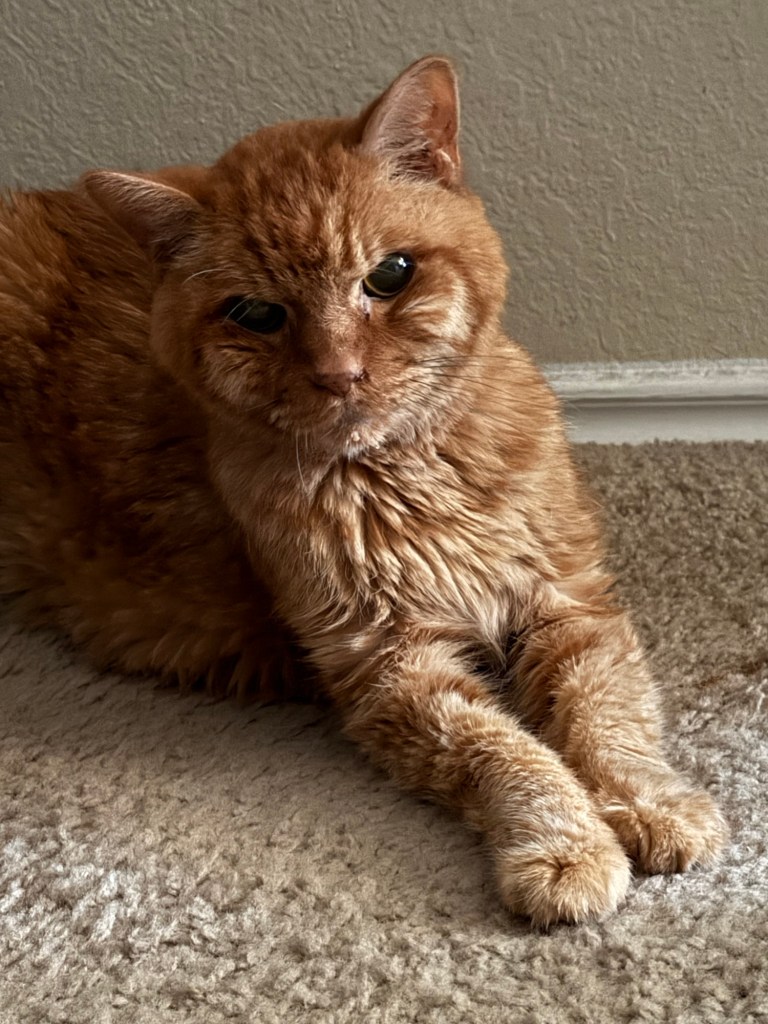
There is a peculiar silence in a home after an animal dies.
It is not simply that one sound has disappeared. The whole rhythm of the house changes.
There is no movement toward the food bowl. No familiar shape asleep in the usual place. No small interruption when you are working, reading, praying, or trying to accomplish something that your companion has apparently decided is less important than paying attention to them. You still look toward certain places because your body has not yet learned what your mind already knows.
And then there are the objects.
The bowl. The bed. The medication. The toys. The carrier you may never want to see again. A few hairs stubbornly attached to something. Photographs that were ordinary photographs a week ago and have suddenly become precious.
For anyone who has deeply loved an animal, the grief can be enormous.
For Catholics, that grief can also produce uncomfortable questions.
Is it appropriate to grieve an animal this deeply? Can I pray for my pet? What does the Church actually teach about animals after death? Is it wrong to hope that I might see this creature again? Can I ask a saint for help? Could I even pray a novena while I grieve?
I think these questions deserve something better than either sentimental certainty or theological dismissal.
Because love has happened here.
And death has interrupted it.
Grief Does Not Need to Be Compared
One of the strangest things about losing a pet is how quickly grief can become defensive.
We know an animal is not a human being. We know losing a cat is not the same thing as losing a child, spouse, parent, or friend.
But knowing that does not make the absence small.
A beloved animal may have been present through enormous portions of a person’s life. They may have lived beside marriages, moves, illnesses, jobs, losses, celebrations, ordinary Tuesdays, and thousands of evenings that seemed completely unremarkable while they were happening.
Their presence becomes woven into the architecture of home.
So when they die, we are not grieving an abstract category called pet.
We are grieving this creature.
This personality.
This set of habits.
This particular life that intersected ours.
There is no reason to inflate that relationship into something it was not. There is also no reason to diminish what it actually was.
Grief does not require a competition before it is allowed to hurt.
What Catholicism Can—and Cannot—Tell Us
Catholic theology gives animals genuine dignity without pretending there is no distinction between animals and human beings.
The Catechism describes animals as God’s creatures and teaches that they are owed kindness. Scripture repeatedly presents the nonhuman creation as belonging to God, praising God, and participating in the goodness of creation.
Genesis does not describe animals as mistakes or scenery.
They are creatures.
God made them.
God called creation good.
That gives a Catholic somewhere solid to begin.
Where we need more humility is in answering exactly what happens to an individual animal after death.
Catholic teaching about human beings is much more specific. We profess the resurrection of the dead and the life of the world to come. Human beings possess a spiritual and immortal soul, and the Church has a developed theology concerning human death, judgment, resurrection, heaven, purgatory, and hell.
The Church has not given us an equivalent doctrine describing the postmortem destiny of an individual cat, dog, horse, bird, or other animal.
That means I would be careful with both extremes.
I would not confidently promise someone, Your pet is definitely waiting for you in heaven.
But I also would not turn the Church’s silence into another certainty and declare, You will absolutely never see that creature again.
We do not need to make doctrine where the Church has not made doctrine.
Christian hope already looks toward the renewal of creation. Scripture gives us astonishing images of creation itself sharing in God’s restoration. Exactly how an individual animal participates in that mystery is something I am comfortable leaving with the Creator who knew that animal before I did.
Sometimes I don’t know, but I trust God is a perfectly Catholic answer.
Can I Pray for My Pet?
Yes—but it helps to understand what we mean by prayer.
We do not need to treat an animal as though it were a human soul in purgatory and simply transfer prayers for the faithful departed onto it. A Catholic funeral Mass, for example, belongs to the Church’s rites for deceased human beings.
But prayer is much larger than petition for the dead.
We can thank God.
We can lament.
We can ask for comfort.
We can tell God that we miss one of his creatures terribly.
We can thank him for allowing that life to intersect ours.
We can ask forgiveness for moments when we were impatient or when we wonder whether we made the right decisions.
We can entrust what we cannot understand to him.
And when an animal is approaching death, we can certainly pray for a peaceful death, relief from suffering, wisdom for those making difficult decisions, and courage to remain present.
There is nothing trivial about bringing grief to God.
A Prayer After the Death of a Beloved Animal
Creator of all that lives,
Thank you for the life of this creature I loved.
Thank you for the ordinary days we shared,
for companionship, trust, laughter, comfort,
and for the small routines I did not know I would someday miss.
You knew this life before it entered mine.
Every breath belonged first to you.
I do not know everything that waits beyond death,
and I will not pretend to know what you have left mysterious.
But I know that you are good.
Receive my gratitude for the life that has ended,
and hold my grief now that my home feels different.
When I question whether I did enough, give me peace.
When memory hurts, let it slowly become consolation.
When I reach instinctively toward an empty place,
remind me that love is not made meaningless because it ended in loss.
Teach me to trust you with what I cannot keep.
And let the love I gave one of your creatures
make me gentler toward all that you have made.
Amen.
What About Saint Francis?
Saint Francis of Assisi is an obvious companion during pet loss, although sometimes the popular image of him as simply “the animal saint” flattens something much richer.
Francis saw creation in relationship to its Creator. Sun, moon, water, animals, human beings—the created world could direct the heart toward God.
That makes him a beautiful intercessor for someone grieving an animal.
One might simply pray:
Saint Francis of Assisi, who loved the creatures of God and recognized creation as his gift, pray for me in my grief. Help me give thanks for the life I was allowed to love, and teach me to release what I cannot keep into the care of the Creator. Amen.
Saint Roch, traditionally associated with dogs, may also be meaningful to some people. And there is no requirement to find a designated “pet-loss saint.” You can ask the intercession of a saint already important in your devotional life.
Could I Pray a Novena for Pet Loss?
I think this could be beautiful—with one important distinction.
I would frame it as a novena for the grieving person, rather than a novena attempting to establish something about the animal’s afterlife.
Nine days can give grief somewhere to go.
Not somewhere to disappear.
Somewhere to go.
Each day could hold one particular piece of the loss:
- The Life — thanking God for this particular creature.
- The Ordinary Days — remembering routines and companionship.
- The Body — grieving illness, aging, injury, or physical decline without allowing the final days to swallow the whole life.
- The Decision — bringing any guilt surrounding euthanasia, treatment decisions, or circumstances of death to God.
- The Empty Places — acknowledging how the home has changed.
- The Memories — asking that painful memories gradually become gifts rather than wounds.
- The Creator — remembering that the creature belonged ultimately to God.
- The Love That Remains — considering how loving an animal changed us.
- Release and Thanksgiving — entrusting the unanswered questions to God and ending with gratitude.
And I would not make Day Nine “goodbye.”
Death already accomplished the separation.
The purpose of the novena would not be forcing ourselves to stop grieving on schedule. Nine days do not erase a relationship that may have lasted fifteen or twenty years.
Day Nine could instead say:
I release my need to understand everything, not my love.
That is something prayer can actually hold.
There Is No Catholic Timetable for Missing Them
Eventually the bowls may be put away.
The bed may disappear.
Perhaps another animal will someday live in the house. Perhaps not.
You may be fine for several days and then find a tuft of fur underneath a piece of furniture and suddenly be crying on the kitchen floor.
Grief is strange that way.
Faith does not require us to hurry through it.
Christian hope does not mean pretending death does not hurt. Christianity takes death seriously enough to call it an enemy while simultaneously insisting that death does not get the final word over creation.
So when a beloved animal dies, perhaps we do not need to solve every theological question immediately.
We can mourn.
We can remember.
We can thank God.
We can light a candle.
We can pray.
We can keep a collar, a photograph, an urn, a paw print, or nothing at all.
And when someone asks us where our beloved animal is now, perhaps we can resist the temptation to manufacture certainty merely because uncertainty hurts.
There are mysteries I can leave with God.
What I know is simpler.
A creature lived.
I was allowed to know that creature.
Love grew in the ordinary space between us.
And now that the creature is gone, the pain tells the truth about the gift.
For today, perhaps gratitude and grief are enough to carry together.

 The Living Rosary Archives