The Invitations of Mary Series
©MS 2026
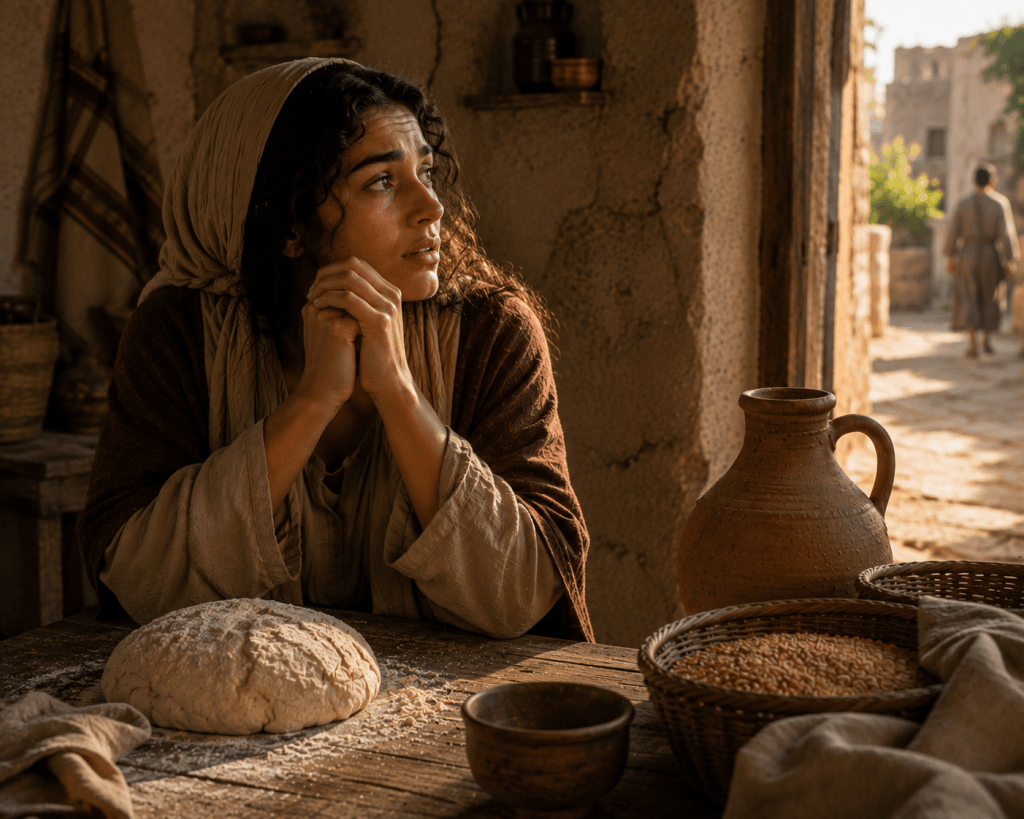
Some news is too enormous to carry alone—and too dangerous to say aloud.
There is a moment after something life-changing happens when the shock gives way to another thought:
I need to tell someone.
Maybe Mary felt it almost immediately.
Gabriel was gone.
The room was quiet again.
She had been told that she would conceive a son.
That he would be great.
That he would be called the Son of the Most High.
That the Holy Spirit would come upon her.
That nothing would be impossible with God.
And Mary had said yes.
Then the angel departed.
And suddenly she possessed information that was both astonishing and almost impossible to explain.
I wonder whose face appeared first in her mind.
Who did Mary desperately want to tell?
And perhaps more frighteningly—
who was she terrified to tell?
Because those may not have been two different people.
Maybe they were the same one.
Maybe it was Joseph.
I wonder how long it took before Mary thought his name.
Seconds?
Minutes?
Perhaps Gabriel hadn’t even finished speaking before some part of her mind was already asking:
What about Joseph?
Mary was betrothed.
Whatever exact expectations, affection, arrangements, and hopes existed between them, Joseph was part of the future she believed she was walking toward.
And now Mary knew something that would affect him profoundly.
She was going to be pregnant.
And Joseph would know the child was not his.
There is no way around that.
We know the rest of the story, which makes it dangerously easy to soften the problem.
We know Joseph receives his own angelic message.
We know he takes Mary into his home.
We know he becomes the earthly father of Jesus.
We know the Holy Family.
Mary didn’t know any of that yet.
When Gabriel left, Mary had received her reassurance.
Joseph had not received his.
And eventually she would have to tell him.
What would that conversation even sound like?
Maybe Mary rehearsed it.
I would have.
She might have started constructing sentences before she ever saw him.
Joseph, something happened.
No.
Joseph, I need you to believe me.
Worse.
An angel came to me.
Already this is going badly.
He told me I’m going to have a child.
Mary pauses in her imaginary conversation.
No.
That’s definitely not enough information.
The child is from the Holy Spirit.
There it is.
The sentence that is completely true and sounds utterly impossible.
How do you tell someone you love something they have every rational reason to doubt?
Maybe Mary knew Joseph’s face well enough to imagine his reaction.
Confusion first.
Then silence.
Maybe hurt.
Maybe disbelief.
Perhaps that was what frightened her most.
Not anger.
Hurt.
There are some people whose anger we can survive more easily than their disappointment.
If Mary loved Joseph—and Christian imagination has certainly long understood their relationship through love, fidelity, and mutual devotion—then the possibility of seeing pain in his face must have been awful.
Maybe she wanted to tell him immediately because Joseph was the person she ordinarily told things to.
And maybe she wanted to delay telling him for exactly the same reason.
Isn’t that horribly human?
I need you to know.
And:
I don’t want to tell you.
Both true at once.
Matthew gives us a glimpse of what eventually happened from Joseph’s side.
He discovered Mary was pregnant.
He knew the child was not his.
And before the angel appeared to him, Joseph decided to end the betrothal quietly rather than expose Mary publicly.
That tells us something important.
For at least some period of time, Joseph did not understand.
There was a gap.
Mary knew.
Joseph didn’t.
And heaven allowed that gap to exist.
I find that incredibly uncomfortable.
Wouldn’t it have been easier if Gabriel had simply scheduled a joint meeting?
One angel.
Two chairs.
Everyone gets the same information simultaneously.
Problem solved.
Instead, Mary receives the Annunciation.
Joseph later faces an apparent betrayal.
Only then does an angel reassure him in a dream.
Why?
I don’t know.
But it means Mary’s yes did not immediately protect her from being misunderstood.
That’s significant.
Sometimes we treat obedience to God as though it should make everything line up neatly afterward.
Mary obeyed.
Then came a conversation she may have dreaded.
And Joseph apparently struggled enough with what he learned that he considered ending their marriage arrangement.
Mary’s obedience didn’t spare either of them from pain.
So maybe Joseph was the person she most wanted to tell.
And the person she most feared telling.
But perhaps there was someone else.
Maybe Mary wanted her mother.
Scripture does not name Mary’s parents. Later Christian tradition gives us Joachim and Anne, but the canonical Gospels tell us virtually nothing about Mary’s childhood or family household.
So we have to be careful here.
We don’t know whether Mary’s mother was living.
We don’t know what their relationship was like.
But Mary was a young woman facing an extraordinary pregnancy.
If she had a trusted older woman in her life—a mother, aunt, relative, neighbor, friend—wouldn’t she have wanted her?
Someone who understood women’s bodies.
Pregnancy.
Birth.
Fear.
Someone who could hear the impossible theological part and still remember to ask:
Have you eaten?
I love that possibility.
Because Gabriel gave Mary cosmic information.
He did not, as far as Luke tells us, provide prenatal advice.
There is something almost funny about that.
The Holy Spirit will come upon you.
Wonderful.
Also:
What am I supposed to do now?
Mary would eventually experience pregnancy in a body.
Whatever its miraculous beginning, the Incarnation was not an abstraction.
Her body would change.
She would need food.
Rest.
Clothing that accommodated her growing abdomen.
She would eventually labor and give birth.
There are questions women often ask other women that don’t belong in angelic proclamations.
Maybe Mary desperately wanted someone who could help with those.
But telling an older woman created another problem.
Would she believe her?
Would anyone?
Then there was Elizabeth.
Elizabeth feels different.
Because Gabriel had already given Mary something extraordinary:
proof that God was doing impossible things elsewhere too.
“Your relative Elizabeth in her old age has also conceived a son.”
Imagine how those words might have lodged in Mary’s mind.
Elizabeth.
She knows something impossible too.
Elizabeth might understand.
Elizabeth might believe me.
Elizabeth might be the one person I don’t have to convince.
Luke tells us Mary went “with haste” into the hill country to visit her.
I love those words.
With haste.
We can read them as eagerness.
Obedience.
Joy.
Perhaps all of those.
But I wonder whether there was also relief inside that haste.
Maybe Mary desperately needed to reach the one person whose life already contained evidence that Gabriel was telling the truth.
Imagine the journey.
Mary carrying this secret mile after mile.
Perhaps rehearsing what she would say.
Maybe wondering whether even Elizabeth would think she had lost her mind.
Then Mary arrives.
She enters the house.
She greets Elizabeth.
And before Mary has to explain everything—
Elizabeth knows.
The child in Elizabeth’s womb leaps.
Elizabeth is filled with the Holy Spirit.
And she cries out:
“Blessed are you among women, and blessed is the fruit of your womb.”
Imagine what that must have done to Mary.
She didn’t have to convince her.
She didn’t have to build a case.
She didn’t have to say:
Please believe me.
Elizabeth met Mary’s impossible secret with recognition.
Perhaps that was the first moment Mary could breathe.
And then comes the Magnificat.
That feels different to me when I imagine everything Mary may have been carrying beforehand.
Maybe the Magnificat isn’t simply a beautiful spontaneous hymn delivered by a serenely confident young woman.
Maybe it is also the sound of something finally being released.
Mary arrives carrying fear, wonder, uncertainty, questions, perhaps dread about Joseph and her future.
Elizabeth looks at her and essentially says:
I see what God is doing in you.
And Mary erupts.
My soul magnifies the Lord.
Of course she does.
Someone finally knows.
I think most of us know the enormous relief of being believed.
Especially when what we’re carrying is difficult to explain.
There is a particular exhaustion that comes from having to prove your own experience.
You begin telling the story while simultaneously anticipating objections.
I know how this sounds.
No, that’s not what I mean.
Wait, let me explain.
Please just listen.
Imagine Mary facing that.
Her experience is, quite literally, unbelievable.
An angel appeared.
God chose me.
I will conceive without being with a man.
My child will be the Son of God.
Nothing about that story sounds easier when repeated aloud.
Maybe there were people Mary simply couldn’t tell.
Neighbors?
Absolutely not.
Not yet.
Friends?
Which ones?
Who could keep such a thing private?
Who would believe her?
Who would hear the story and immediately carry it to someone else?
Nazareth was not an anonymous modern city where Mary could disappear into a crowd.
Communities notice things.
People talk.
And pregnancy eventually becomes visible.
How long before someone began counting months?
How long before someone whispered?
How long before someone looked at Joseph?
Or looked at Mary differently?
There must have been fear there.
Not necessarily the melodramatic fear we sometimes project backward onto her story, but the deeply human fear of losing control over how other people understand you.
Mary knew the truth.
That didn’t mean everyone else would.
And once people decide what they think happened, explanations do not always matter.
Maybe Mary learned that painfully early.
And what about God?
That sounds like a strange answer because, obviously, God already knew.
But I wonder whether Mary talked to him differently after Gabriel left.
Before the Annunciation, she prayed to the God of Israel.
Afterward, God’s promise was happening inside her own body.
Perhaps she whispered things she couldn’t say to anyone else.
I’m afraid.
What do I tell Joseph?
Will he believe me?
What will people say?
What happens to me now?
You said not to be afraid.
I’m still afraid.
I would love to know those prayers.
Not because I think Mary’s faith was weak.
Because fear spoken to God is still faith.
You don’t have to hide fear from someone you trust.
Maybe Mary discovered that her yes did not end the conversation with God.
It began one.
Eventually, of course, people knew.
Joseph knew.
Elizabeth knew.
Family knew.
Neighbors knew she was pregnant, even if they did not understand how.
The child was born.
Shepherds arrived with their own impossible story.
Simeon recognized him.
Anna recognized him.
Years later, crowds would follow him.
Eventually the secret Mary once carried alone would become proclamation:
Jesus is the Son of God.
But before anyone preached it—
Mary knew.
There is something tender about imagining those first hours.
A young woman carrying the earliest Christian secret before Christianity existed.
Wanting desperately to tell someone.
Afraid of what would happen when she did.
Maybe Joseph’s name hurt to think about.
Maybe Elizabeth’s name felt like hope.
Maybe Mary sat for a while deciding who could hold this with her.
And perhaps that’s another piece of her humanity we lose when we rush from the Annunciation straight into the Visitation.
Between those scenes was a woman who had to decide:
Who can I trust with what has happened to me?
That’s not an ancient question.
We still ask it.
Who will believe me?
Who will panic?
Who will judge?
Who will make this about themselves?
Who will immediately try to fix it?
Who will tell someone else?
Who will simply sit beside me and say:
I believe you.
Perhaps that is part of why Elizabeth’s greeting is so beautiful.
Mary doesn’t even get through the explanation.
Elizabeth recognizes her.
Blesses her.
Calls the child within her blessed.
And asks why the mother of her Lord has come to her.
No interrogation.
No suspicion.
No demand for evidence.
Just recognition.
Maybe Mary had spent the entire journey preparing to explain herself.
And then discovered she didn’t have to.
I wonder if she cried then.
Not frightened tears.
Relief.
Because for the first time since Gabriel departed, someone else knew.
Someone else understood enough.
Mary no longer had to carry the impossible alone.
And perhaps, before the Magnificat became a prayer recited for thousands of years, there was simply a young woman standing in Elizabeth’s house thinking:
Thank God.
Someone believes me.


