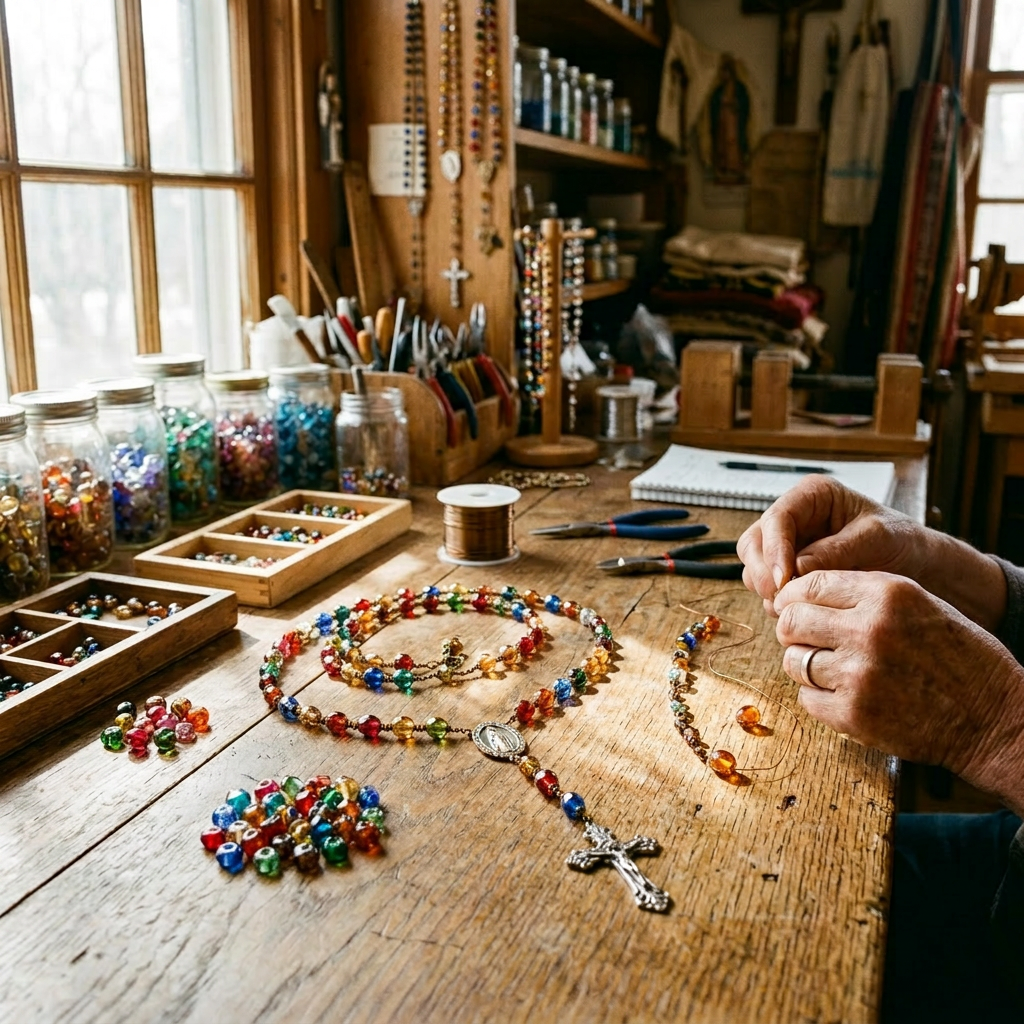
If organic rosaries tell stories of forests, harvests, family workshops, and local necessity, non-organic rosaries reveal something different:
trade, craftsmanship, pilgrimage, technology, durability, and the human desire to create objects both beautiful and enduring.
Stone, glass, and metal rosaries expanded what devotional objects could become.
They traveled farther. Lasted longer. Reflected specialized skill. Sometimes they spoke of wealth, sometimes accessibility, and often of devotion expressed through craftsmanship itself.
Yet their purpose remained unchanged.
Whether carved from wood or cast in silver, whether assembled from humble pressed glass or polished gemstone, rosaries still passed through the same human hands seeking comfort, repetition, prayer, and presence.
The material changed.
The need beneath it did not.
Stone: Prayer Shaped by Earth
Stone rosaries often carry an immediate sense of permanence.
Cool to the touch, substantial in the hand, and resistant to wear, stone beads have long appealed to believers seeking devotional objects meant to endure.
Some materials were selected because they were local and practical. Others reflected trade, status, symbolism, or spiritual meaning.
Jet, a dense black fossilized wood often categorized historically alongside stone materials, became particularly associated with mourning jewelry and devotional objects in parts of Europe. Coral rosaries appeared in Mediterranean regions where coastal trade shaped both economy and craft. Agate, jasper, hematite, quartz, onyx, marble, lava stone, amber, and semi-precious gemstones all entered rosary production through different cultural and geographic pathways.
Sometimes symbolism mattered deeply.
Dark stones could evoke mourning, humility, or solemnity. Red stones sometimes connected visually to sacrifice, suffering, or the Sacred Heart. White and pale stones suggested purity, Marian devotion, or light.
At other times, practicality mattered more than symbolism.
Stone beads resisted wear. They aged slowly. Unlike wood or seeds, they rarely cracked from ordinary use. Their weight created a tactile steadiness in prayer, allowing repetition to settle into rhythm.
Even today, many antique stone rosaries remain remarkably intact, their surfaces carrying only subtle smoothing where fingers returned to the same decades over time.
Glass: Color, Craft, and Accessibility
Glass transformed rosary making.
Unlike carved wood or rare gemstones, glass could be shaped, colored, faceted, pressed, molded, and eventually mass-produced in extraordinary variety.
And yet, glass rosaries should not be mistaken as merely decorative.
Many represented remarkable craftsmanship.
Venice, particularly through Murano glass traditions, became famous for intricate beadmaking techniques. Czech and Bohemian glass workshops likewise shaped devotional markets through colored, pressed, and faceted beads that circulated widely across Catholic regions.
Some rosaries shimmered with rich blues, reds, greens, and golds. Others remained simple and modest, intended for everyday prayer.
Glass offered something unique:
beauty without necessarily requiring great wealth.
Pressed glass beads allowed devotional objects to become more widely available. Pilgrims visiting shrines or holy sites often returned home with rosaries assembled from locally produced materials, including colored glass associated with Marian shrines, saints, or regional devotional practices.
Industrial production later expanded accessibility even further.
By the nineteenth and twentieth centuries, rosaries could be manufactured in larger quantities, making devotional objects available to ordinary households at lower cost.
Yet handmade glass rosaries never disappeared.
The tension between artistry and accessibility remained.
A rosary might be exquisitely detailed—or quietly humble.
Either way, it served the same repetitive work of prayer.
Metal: Weight, Memory, and Endurance
Metal rosaries occupy an interesting place in devotional history.
Silver, brass, bronze, pewter, iron, aluminum, steel, and plated metals each tell different stories about cost, craftsmanship, era, and purpose.
Silver rosaries often reflected heirloom quality, gift traditions, sacramental milestones, or family inheritance. Brass and bronze proved durable and practical. Pewter appeared frequently in devotional medals and crucifixes due to affordability and ease of casting.
Some metal rosaries emerged from moments of scarcity.
Wartime rosaries, trench rosaries, and military devotional items often prioritized durability and portability over ornamentation. Aluminum, inexpensive metals, salvaged fragments, or practical construction methods reflected difficult historical realities.
Metal aged visibly.
Silver tarnished.
Brass softened in tone.
Iron oxidized.
Edges wore smooth.
And unlike some fragile materials, metal often survived.
A rosary passed through generations may arrive scratched, darkened, repaired, or incomplete, yet still structurally intact—evidence of long companionship.
Metal also changed how prayer felt.
Weight matters.
A silver rosary draped through the hand moves differently than a corded one. Cool metal beads, chain tension, and tactile repetition shape experience in ways rarely noticed consciously, yet deeply remembered by those who pray with them daily.
Beauty, Status, and the Question of Wealth
It can be tempting to divide rosaries into categories of “simple” and “luxurious,” yet history resists such easy distinctions.
Yes, some rosaries reflected status.
Gemstones, silver filigree, imported materials, and elaborate craftsmanship could signal wealth, patronage, pilgrimage, or family importance.
But beauty itself has always occupied a complicated place in religious life.
A carefully made rosary might represent reverence rather than vanity.
A parent may save for years to gift a rosary at confirmation or marriage. A pilgrim may purchase a rosary from a shrine not because it is expensive, but because it carries emotional and spiritual significance.
Sometimes craftsmanship itself becomes devotion.
To carve, cast, polish, wire, bead, or assemble an object for prayer may itself be an act of care.
Even ornate rosaries eventually become ordinary through use.
The precious metal dulls.
The chain loosens.
The bead smooths beneath countless fingers.
Prayer humbles objects over time.
Faith Meant to Endure
Stone, glass, and metal rosaries reveal something quietly profound about devotional history:
human beings have long sought materials that endure.
The forest gave wood.
The harvest gave seed.
But workshops, kilns, quarries, foundries, merchants, and artisans offered something else:
longevity.
Objects built to survive travel, inheritance, repair, memory, and repetition.
And still, even the most durable rosary ultimately becomes shaped by touch.
A polished stone softens at its edges.
Glass loses sharp brilliance where fingers linger.
Silver darkens, then shines again after care.
The object changes because the person changed it.
That may be the most human detail of all.
A rosary survives not simply because it was made well, but because someone continued reaching for it.
Again.
And again.
And again.


