A rosary is easy to overlook at first. Strings of similar beads slipped through fingers day after day wear smooth from use. It is tempting to see a rosary as a largely uniform thing. But materials have stories of their own.
When did someone choose wood over glass?
Seeds, pits, bone, horn, jet, silver, stone, hand-tied knots of cord?
More often than not, the answer is not one thing. Rosaries are made of whatever survivors made them from: whatever was available due to necessity or geography; devotion; available trade; economics; symbolism; local craftsmanship; or circumstance.
Some rosaries were made of readily available materials because they were convenient. Others were made of beautiful materials; respectful materials; valuable materials; materials purchased on pilgrimage; mourning rosaries; rosaries made for protection; or else materials near-universal to a region or tradition.
Fishermen made rosaries from what washed up on the shore.
Monasteries had rosaries carved from what grew nearby.
Families scraping by utilized whatever could be found, afforded, saved, or repurposed.
An Irish rosary may look different from one made in Italy, Mexico, France, the Holy Land, or the Philippines. Of course artists’ styles vary, but so do continents, landscapes, histories, and human lives. Those things matter when you consider what materials were available to be fashioned into rosaries. But below that history, below materials and manufacture, there is something else instinctively human about rosaries.
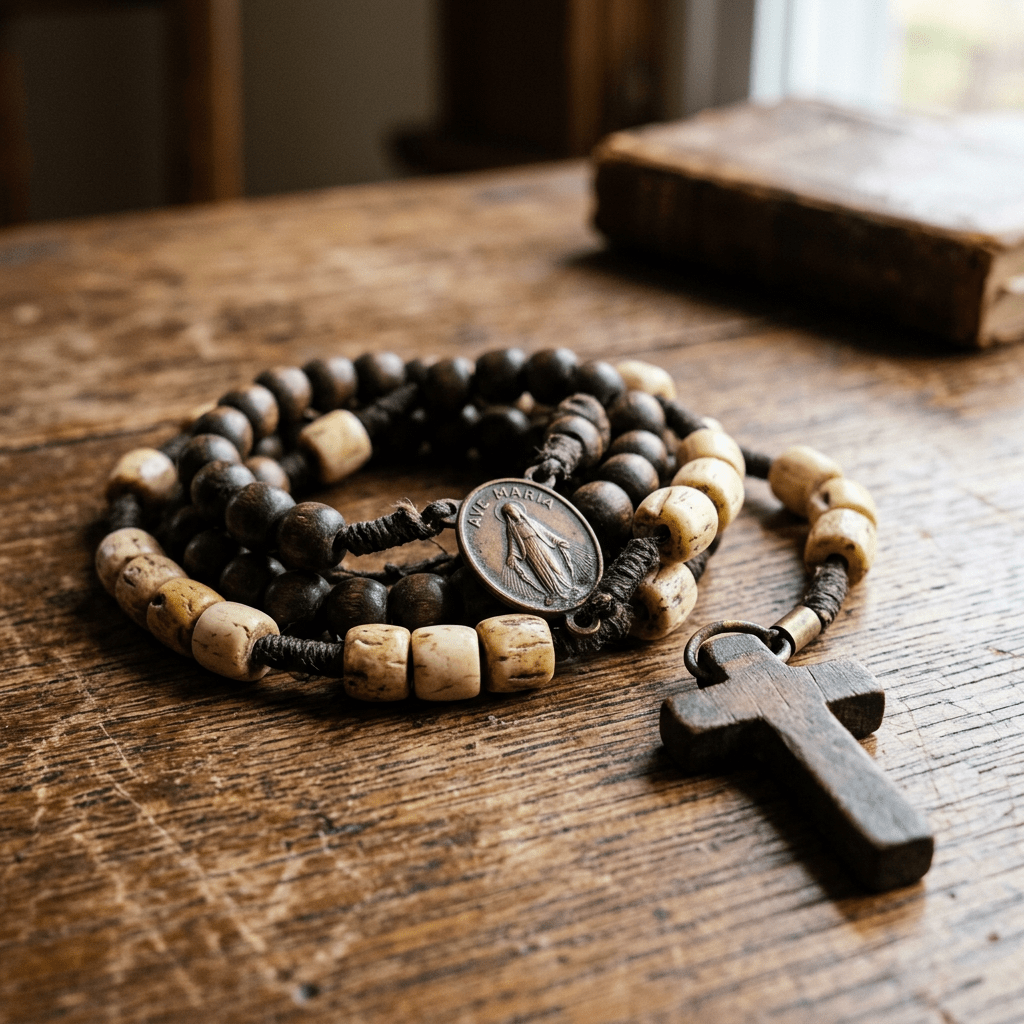
Beads and prayer are personal. Let us consider rosaries made of bone or horn for a moment. Beyond rosaries as objects, try to imagine holding one.
Think about wrapping one around your fingers. Wonder about relying on one daily. Bone and horn are two of the most commonly-used materials for carved rosary beads, and that is no accident. They last. They are readily-worked. They were available near where many people lived. Bone and horn vary slightly in color and texture based on the natural grain of the source, or deliberate carvings made by artisans.
They do not bear the uniformity of manufactured materials. Held in your hand, bone and horn rosary beads might feel smooth. But they retain a faintly organic texture under your fingertips. When you warm them by repeated touching they warm further. It becomes comfortable. These details can feel small.
But for someone offering prayers daily, materials become tactile. Stone feels cold. Wood feels warm. Hand-carved beads do not fit together as evenly as machine-made ones. Cord worn from years of use softens. These small pieces of rosaries can influence how we touch them, and those details change prayer subtly.
Prayer may be spiritual, but it is not immaterial. Hands brush across each bead in sequence. Muscle memory settles into the decades we spend repeating the same prayers. We memorize the shape of our rosaries in our hands without thinking about it, identifying by feel which decade we are on when we’re too tired, or scared, or grieving, or numb to pay closer attention. We can find them in the dark because we know where worn edges and loved textures lie.
Now imagine praying on that bone rosary while watching your children die of starvation during the Great Famine. Materials like bone and horn were convenient. Durable. Nothing new to communities with longstanding traditions of handcraft influenced by necessity and environment. Imagine all the prayers those beads have heard. Silent pleas for little bodies too still. Prayers scared mutely into coffin lids. Promises made to sons and daughters boarded at overloaded ships. Desperate prayers for work in foreign fields. Vigils kept weeping in tenements or kitchen tables. Imagine tracing your fingers over the same places again and again, not because you’ve given up but because you can’t stop praying.
This story is not unique. Throughout history, humans have clasped beads in their hands while the world changed around them because sometimes faith is the one thing we can take with us when our visions of the future are destroyed. Soldiers have shoved rosaries into coat pockets before marching onto battlefields, clinging to hemlines and nervously rubbing crucifixes while standing in line to fight.
Parents have whispered prayers alongside sickbeds, repeating decades throughout sleepless nights.
Migrants have carried rosaries across borders. Sailors have transported them across seas.
Laborers have traveled away from farms to unfamiliar cities clutching devotional objects small enough to fit into pockets but large enough to hold emotional significance. During each of these moments, materials mattered because they lasted.
Wood warps, or darkens with skin oils. Metal tarnishes. Cord stretches and needs to be knotted again. Glass breaks. Seeds dry out, harden. Stone grows cold in winter, and warm as you hold it in your hands.
Everything ages differently, and through that aging, begins to record the evidence of its use. That is part of why antique rosaries can feel like holding someone else’s memories.
Long after they are separated from the people who once prayed with them, you can still see the signs the rosaries have been used. See where a bead has been rubbed smooth by decades of repetition. It is evidence. Physical evidence that here, something happened.
Maybe we will never know the dramatic details. But someone prayed with this. Enough that their fingers left wear patterns on its surface.
Bone and horn are frequently entwined with regional identity, too. Olive wood became common in Mediterranean countries because olive trees were ubiquitous in daily life and carried additional biblical significance related to peace, proper seasons, and the holy land. Seeds and indigenous hardwoods were naturally integrated into prayer traditions throughout Central and South America. In northern European and Asian countries, where tall forests dominated landscapes, wood carving was similarly necessary and familiar. Shell or coral were common near beaches, and certain monasteries became well-known for their traditions of carving bone, horn, or specific woods.
Trade allowed for continued diversity of materials. Eventually, pilgrims and rosaries could travel farther than most people ever would. Jet from one country. Silver from another. Woods carved close by, or brought to regional artisans through trade. Glass may have been formed locally, but its origins traced back further still to glassworks that specialized in beads. The materials that made up a “simple” rosary could quietly travel the world while most people remained in one place. Throughout time, supplies clearly played a role in what rosaries were made from. But availability was not the only factor that shaped meaning.
Cheap cord knotted into decade lengths can become more beloved than intricate silver rosaries. In periods of persecution or war, religious object disguised themselves as jewelry or replaced altogether with what believers could cobble together. Prisoners etched crucifixes into soap orstones. Seeds were substituted when sacramental beads were confiscated. Fingertips learned to count when all other objects were removed. When survival shadows your faith, you learn to adapt your devotion to what you have. But inverse is true as well.
We become emotionally invested in objects because they become intertwined with our lives. A rosary received at baptism, confirmation, marriage before leaving for deployment, during illness, or after losing a loved one accumulates touches, memories, feelings, and presence. It links us to family voices we remember. Hands that are no longer with us. Promises we made or had made to us. Prayers said and prayers forgotten. For this reason, some families pass rosaries down through multiple generations.
The financial value might be cheap. Some might even consider the work sloppy compared to expected standards. But what gets passed along is far greater than what can be purchased. Grandparents’ rosaries might have tiny repairs we’ve made decades ago to replace a lost bead, repair a chain, or resolder a crucifix worn down from use. Flaws never decrease the love we attach to these objects. More often, they amplify it. Clearly, that person loved something enough to keep it. And in that effort, we learn about the lifespan of the object as well.
Were mush shoved into a chest before crossing the Atlantic? Left in a drawer next to a handwritten prayer card? Carried to Catholic mass after being concealed throughout years of Protestant rule? Worn while walking the Camino and returned home smoothed by pilgrimage?
Every object eventually collects a story with its material history. Rosaries are no different. They are capsules of devotion carried by ordinary people living through incredible slices of history. War. Migration. Poverty. Pilgrimage. Sickness. Celebration. Marriage. Death. Gratitude. Fear. Decades before documented photographs, knapsacks, or Facebook; hands carried memory through the repetition of touch. Though they may hold no written records, rosary beads worn smooth have stories to tell.
No comments on Rosary Beads: Why Materials Matter
Rosary Beads: Why Materials Matter

 The Living Rosary Archives